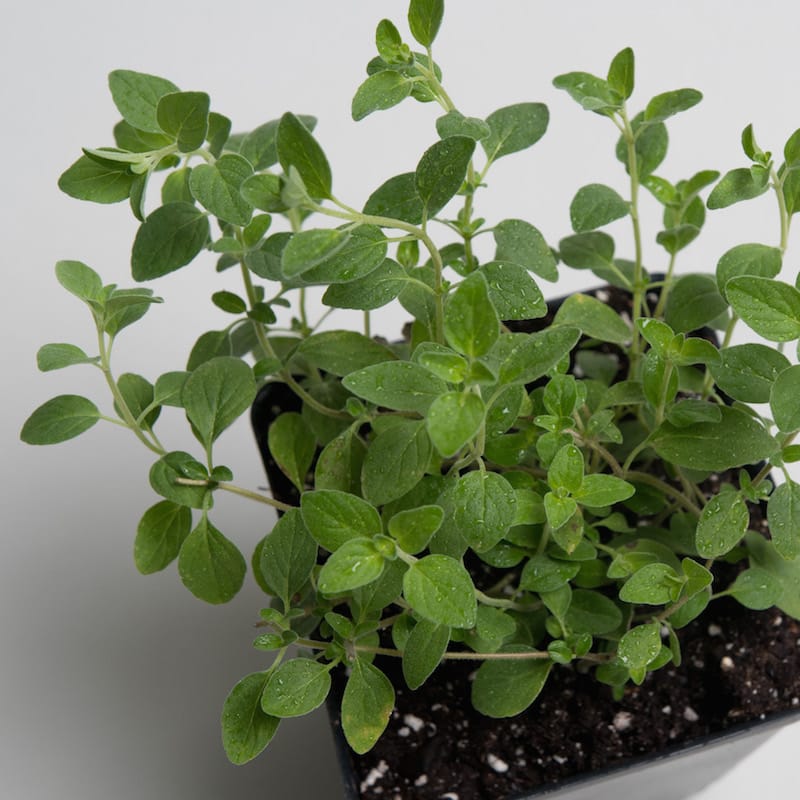
Oregano 'Italian'
Oregano 'Italian'
Quick Growing Facts
- Culinary
- Deer Resistant
- Aroma
- Container
- Pollinator
- Indoor
- Cut
- Butterfly
- Drought
Couldn't load pickup availability
Italian Oregano Plants
Origanum vulgare
Bring warm, savory flavor to your kitchen with Italian Oregano. This oregano-and-marjoram hybrid combines familiar oregano flavor with a softer, sweeter note, making it a versatile choice for everyday cooking.
Its aromatic green leaves and spreading growth fit beautifully into sunny herb beds and containers. Small white flowers add seasonal interest and attract visiting pollinators.
A Kitchen Staple, Fresh or Dried
Use Italian Oregano to season tomato sauces, pizza, roasted vegetables, beans, meats, and marinades. Strip the leaves from tender stems and chop them for fresh use, or dry small harvests to stock your spice cupboard.
Pair it with basil, rosemary, or thyme, adjusting the amount to suit your recipe. Explore our oregano plants for more kitchen-garden favorites.
Growing Italian Oregano
- Light: Choose full sun, ideally with at least six hours of direct sunlight daily.
- Soil: Plant in well-drained soil. Avoid locations that remain wet after rain.
- Water: Water regularly while plants establish. Once established, allow the soil to dry somewhat between waterings.
- Containers: Use a pot with drainage holes and a well-draining potting mix. Check moisture more often during hot weather.
- Feeding: Avoid excessive fertilizer. Supplement only as needed for your soil or potting mix, following the fertilizer label.
- Pruning: Snip growing tips to encourage branching and keep the plant tidy. Leave healthy foliage after trimming.
Harvest a Little at a Time
Begin harvesting once your plant is established and growing well. Use clean scissors to cut leafy stem tips just above a pair of leaves, leaving plenty of growth for the plant to recover.
For a larger harvest to dry, gather leafy stems before flowers fully open. You can continue taking smaller harvests as the plant produces fresh growth.
Save Some for Later
Dry small bundles in a dry, well-ventilated place out of direct sunlight. In humid conditions, use a food dehydrator according to its herb-drying instructions so the leaves dry promptly.
Once the leaves are fully dry and crumble easily, strip them from the stems and store them in an airtight container away from heat, light, and moisture.
New plants just arrived? Follow our arrival and planting guide before moving them into their permanent garden bed or container.