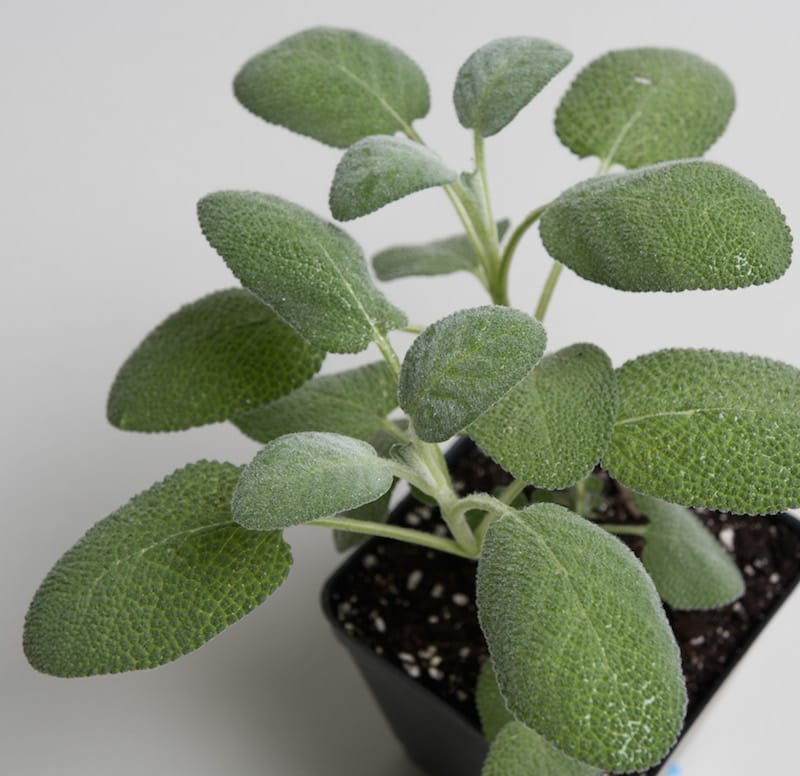
Sage 'Berggarten'
Sage 'Berggarten'
Quick Growing Facts
- Culinary
- Medicinal
- Deer Resistant
- Aroma
- Container
- Pollinator
- Cut
- Butterfly
- Drought
Couldn't load pickup availability
Berggarten Sage Plants
Salvia officinalis ‘Berggarten’
Beautiful enough for a border and useful enough for the kitchen, Berggarten Sage earns its place in an herb garden. Its broad, rounded leaves have a soft, silvery-gray appearance, bringing color and texture to sunny beds and containers.
This culinary sage forms a compact, bushy plant and flowers less frequently than many other sage varieties. Its generous leaves are easy to gather for cooking, while its tidy shape makes it an attractive edging or accent plant.
Classic Sage Flavor for Your Kitchen
Use Berggarten Sage to season roasted vegetables, poultry, beans, stuffing, and savory sauces. Its earthy flavor pairs especially well with potatoes, squash, and browned butter.
Start with a small amount and adjust to taste—sage can quickly become the strongest flavor in a dish. Pair it with Italian Oregano or thyme for a fragrant herb combination.
Growing Berggarten Sage
- Light: Choose full sun, ideally with at least six hours of direct sunlight daily.
- Soil: Plant in well-drained soil. Avoid low spots and areas that remain wet after rain.
- Water: Water regularly while the plant establishes. Once established, allow the soil to dry somewhat between waterings rather than keeping it constantly moist.
- Containers: Use a pot with drainage holes and a well-draining potting mix.
- Pruning: Trim lightly to encourage branching. Leave healthy leafy growth rather than cutting deeply into bare, woody stems.
- Winter care: Good drainage is particularly important during cold, wet weather. Winter appearance and survival depend on local conditions.
Harvest Leaves as Needed
Begin harvesting once your plant is established and growing well. Pick individual leaves or snip tender stem tips, leaving plenty of foliage for continued growth. Use fresh leaves in cooking or dry small harvests for later use.
Explore our sage plant collection for more garden favorites. New plants just arrived? Follow our arrival and planting guide before planting.