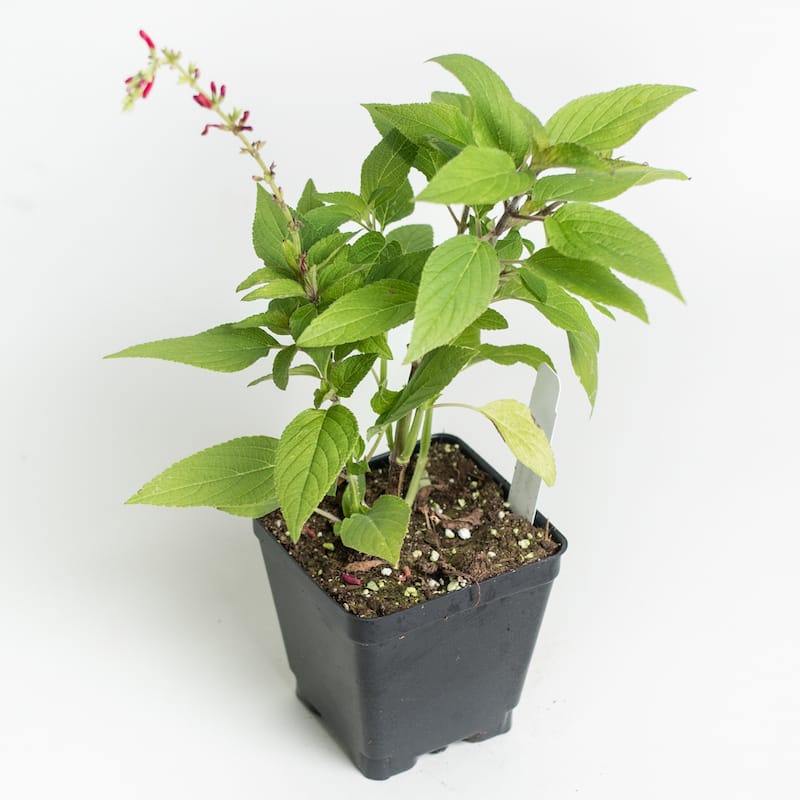
Sage 'Pineapple'
Sage 'Pineapple'
Quick Growing Facts
- Culinary
- Medicinal
- Deer Resistant
- Aroma
- Pollinator
- Cut
- Butterfly
Couldn't load pickup availability
Pineapple Sage Plants
Salvia elegans
A tropical fragrance and brilliant red flowers make Pineapple Sage a standout. Gently brush its soft green leaves to release their pineapple-like scent, and give this vigorous plant room to become a leafy backdrop in your herb garden.
Fragrant Leaves and Scarlet Flowers
Its tubular red blooms attract hummingbirds when flowering overlaps their local season. Pineapple Sage typically flowers late in the growing season; in colder climates, frost may arrive before the flowers open.
A Fresh Touch for the Kitchen
Use fresh leaves to infuse teas and other drinks. The edible flowers make colorful garnishes for fruit salads and desserts.
Growing Pineapple Sage
- Light: Full sun.
- Soil: Moist, well-drained soil.
- Water: Keep evenly moist. Unlike many Mediterranean herbs, it does not appreciate prolonged dry conditions.
- Climate: A tender perennial commonly grown as an annual in colder regions. Protect container plants from frost if overwintering indoors.
- Space: Allow room for a substantial, branching plant. Shelter tall stems from strong winds.
- Pruning: Pinch young stem tips to encourage fuller growth.
Harvest tender leaves once established, leaving plenty of foliage. Explore our sage plants for more garden favorites, and follow our arrival and planting guide when your plants arrive.