Butterfly Bush 'Bicolor'
Buddleia x weyeriana Bicolor
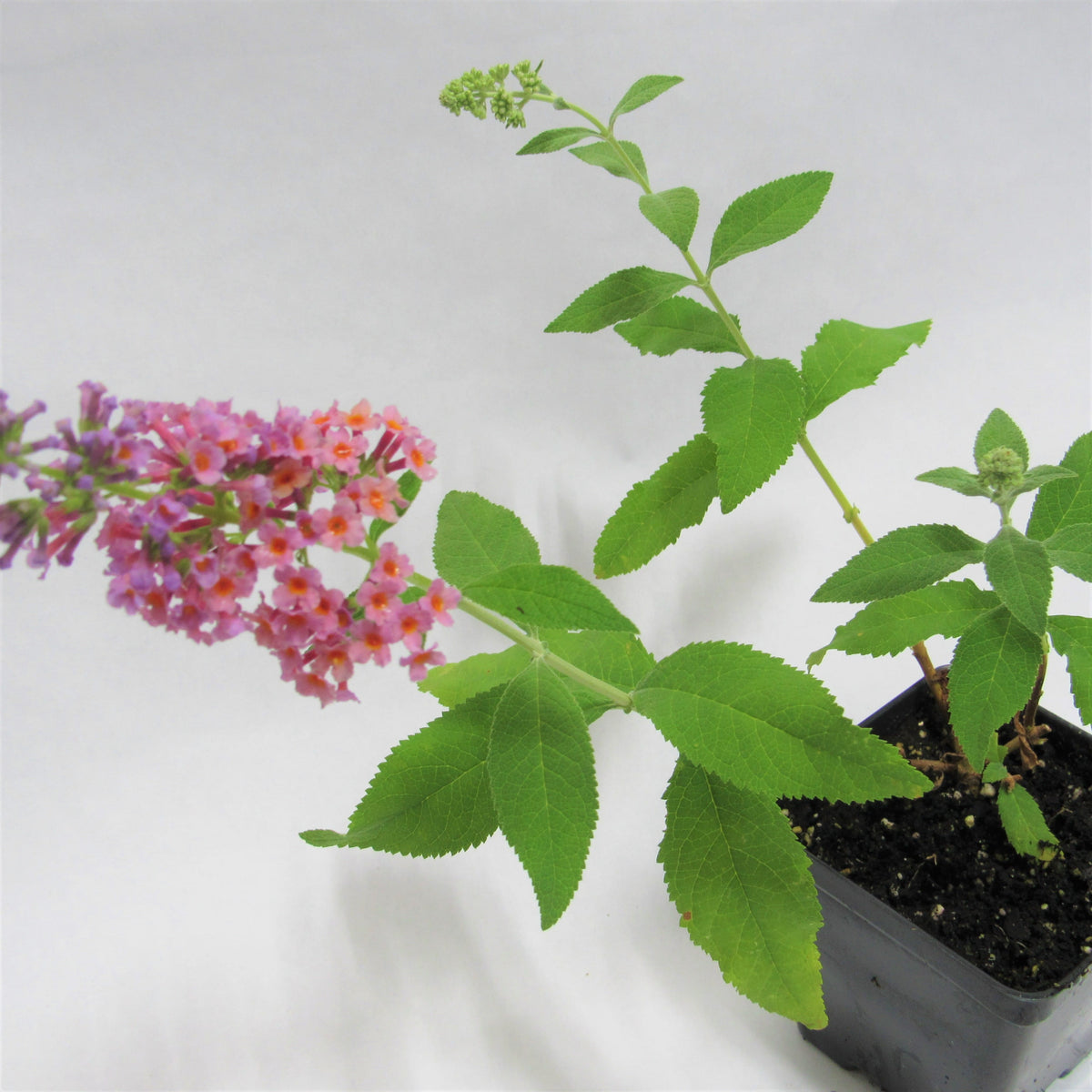
Discover the vibrant charm of our uniquely colorful butterfly bush, featuring stunning 6-8 inch long, multi-colored flowers that captivate the eye. Blooming from early summer through fall, these flowers attract a delightful array of butterflies, honeybees, and hummingbirds, enriching your garden’s ecosystem.
The bicolor variety reaches 5-6 feet tall and thrives in well-drained, moist soil in full sun. Regular deadheading encourages continuous blooming, ensuring your garden remains lively and enchanting throughout the season. Add this eye-catching, wildlife-friendly plant to your garden for a burst of color and nature’s visitors.
Quick Growing Facts
- Deer Resistant
- Aroma
- Pollinator
- Cut
- Butterfly
Couldn't load pickup availability
Butterfly Bush 'Bicolor'
Buddleia x weyeriana Bicolor
Discover the vibrant charm of our uniquely colorful butterfly bush, featuring stunning 6-8 inch long, multi-colored flowers that captivate the eye. Blooming from early summer through fall, these flowers attract a delightful array of butterflies, honeybees, and hummingbirds, enriching your garden’s ecosystem.
The bicolor variety reaches 5-6 feet tall and thrives in well-drained, moist soil in full sun. Regular deadheading encourages continuous blooming, ensuring your garden remains lively and enchanting throughout the season. Add this eye-catching, wildlife-friendly plant to your garden for a burst of color and nature’s visitors.
Butterfly Bush ‘BiColor’ – Easy Growing Tips 🦋🌸
Make your Butterfly Bush happy with these simple steps:
🌞 Light
- Plant in full sun
- Needs 6–8 hours of direct sunlight every day
- Too much shade = fewer flowers
🌡️ Temperature & Climate
- Best in USDA Zones 5–9
- Loves warm summers
- In colder areas, it may die back to the ground in winter but often regrows in spring
🌱 Soil
- Prefers well-drained soil (no standing water)
- Grows in poor to average soil – doesn’t need rich soil
- Slightly alkaline to neutral soil is ideal, but it’s flexible
Tip: If your soil is heavy clay, mix in compost and sand or grit to improve drainage.
💧 Watering
- Water regularly the first year while it’s getting established
Keep soil lightly moist, not soggy
- Once established, it’s drought-tolerant 🌵
- Let the top 1–2 inches of soil dry out between waterings
🌸 Fertilizer
- Doesn’t need much feeding
- In early spring, you can:
Add a thin layer of compost around the base, or
Use a balanced, slow‑release fertilizer (follow package directions)
- Too much fertilizer = more leaves, fewer flowers
✂️ Pruning
- Prune in late winter or very early spring
Cut stems back to about 12–24 inches from the ground
Remove any dead, weak, or crossing branches
- During bloom season, deadhead (cut off spent flower spikes) to:
Encourage more blooms
Help prevent self-seeding
🪴 Planting Tips
- Space plants 5–6 feet apart so they have room to grow
- Dig a hole twice as wide as the root ball, but not deeper
- Place the plant so the top of the root ball is level with the soil
- Backfill, gently firm the soil, then water well
🦋 Pollinators & Wildlife
- Attracts butterflies, bees, and hummingbirds 🦋🐝🐦
- Plant near patios or seating areas to enjoy the show
🐛 Pests & Problems
- Usually low-maintenance and trouble-free
- Watch for:
Spider mites in hot, dry weather (look for tiny webs and speckled leaves)
Root rot in wet, poorly drained soil
Prevention:
- Don’t overwater
- Make sure soil drains well
🌿 Winter Care
- In cold areas, add a light layer of mulch around the base in late fall
- Don’t pile mulch against the stems – leave a little space
- If stems die back, wait until spring to see what resprouts before removing them
🌈 Extra Tips for Success
- Plant your ‘BiColor’ where you can see the purple + yellow two-tone blooms up close
- Combine with:
Russian sage, coneflowers, black‑eyed Susans, salvias
- Great for sunny borders, cottage gardens, and wildlife gardens 🌼
Follow these basics and your Butterfly Bush ‘BiColor’ should thrive and bring tons of butterflies to your garden! 🦋💜💛
Fun Ways to Use Butterfly Bush ‘BiColor’ in Your Garden 🦋🌸
Here are simple ideas for enjoying your plant once it’s growing and blooming:
🦋 Create a Butterfly & Pollinator Corner
- Plant it near other pollinator-friendly flowers like coneflowers, zinnias, and salvia
- Add a shallow water dish with stones so butterflies and bees can drink
- Place a bench or chair nearby so you can sit and watch the butterflies
👉 Great for kids and guests to enjoy nature up close.
🌸 Use as a Colorful Focal Point
- Plant ‘BiColor’ where its two-tone flowers (purple + yellow) really stand out
- Use it as a centerpiece in a sunny flower bed
- Surround it with lower plants so the butterfly bush is the star of the show ✨
🚶♀️ Brighten Pathways & Entrances
- Plant near a walkway, driveway, or front entry
- The blooms and butterflies create a welcoming feel for anyone visiting 🏡
- Every time you walk by, you’ll see movement and color
🪟 Enjoy From Indoors
- Place it where you can see it from a window, porch, or patio
- You’ll enjoy the butterflies and flowers without even going outside
🌼 Mixed Border or Cottage Garden Look
- Combine with:
🌿 Russian sage
🌼 Black-eyed Susans
🌸 Coneflowers
💜 Catmint
- This gives a soft, flowing, cottage-style garden that’s full of life
✂️ Cut Flowers for Simple Bouquets
- Snip a few flower spikes and place them in a vase indoors
- Mix with greenery or other garden flowers for an easy homegrown arrangement
- Trim in the morning and put stems in water right away for longer-lasting blooms 💐
🐦 Attract Birds & Other Wildlife
- Flowers attract hummingbirds and bees as well as butterflies
- Combine with seed-producing plants (like sunflowers or coneflowers) to invite songbirds too 🎶
😌 Relaxing “Garden Retreat” Spot
- Put your Butterfly Bush near a small seating area:
A chair, bench, or hammock
Maybe a small table for coffee or tea ☕
- Enjoy the scent, color, and movement as a daily stress reliever
📸 Photo & Memory Spot
- Use it as a backdrop for family photos in the garden
- Take pictures of the different butterflies that visit and note which ones you see 📷🦋
👩🌾 Teaching & Sharing Plant
- Great for teaching kids or friends about:
Pollinators
Flower colors and shapes
How plants support wildlife
- You can even share cuttings or seedlings (where allowed) with neighbors and gardening friends 🤝
By placing Butterfly Bush ‘BiColor’ where you’ll see it often and combining it with other sunny flowers, you turn it into more than just a plant — it becomes a butterfly magnet, color spot, and relaxing view in your garden. 🦋💜💛
Butterfly Bush 'Bicolor'
Buddleia x weyeriana Bicolor
Discover the vibrant charm of our uniquely colorful butterfly bush, featuring stunning 6-8 inch long, multi-colored flowers that captivate the eye. Blooming from early summer through fall, these flowers attract a delightful array of butterflies, honeybees, and hummingbirds, enriching your garden’s ecosystem.
The bicolor variety reaches 5-6 feet tall and thrives in well-drained, moist soil in full sun. Regular deadheading encourages continuous blooming, ensuring your garden remains lively and enchanting throughout the season. Add this eye-catching, wildlife-friendly plant to your garden for a burst of color and nature’s visitors.
Butterfly Bush ‘BiColor’ – Easy Growing Tips 🦋🌸
Make your Butterfly Bush happy with these simple steps:
🌞 Light
- Plant in full sun
- Needs 6–8 hours of direct sunlight every day
- Too much shade = fewer flowers
🌡️ Temperature & Climate
- Best in USDA Zones 5–9
- Loves warm summers
- In colder areas, it may die back to the ground in winter but often regrows in spring
🌱 Soil
- Prefers well-drained soil (no standing water)
- Grows in poor to average soil – doesn’t need rich soil
- Slightly alkaline to neutral soil is ideal, but it’s flexible
Tip: If your soil is heavy clay, mix in compost and sand or grit to improve drainage.
💧 Watering
- Water regularly the first year while it’s getting established
Keep soil lightly moist, not soggy
- Once established, it’s drought-tolerant 🌵
- Let the top 1–2 inches of soil dry out between waterings
🌸 Fertilizer
- Doesn’t need much feeding
- In early spring, you can:
Add a thin layer of compost around the base, or
Use a balanced, slow‑release fertilizer (follow package directions)
- Too much fertilizer = more leaves, fewer flowers
✂️ Pruning
- Prune in late winter or very early spring
Cut stems back to about 12–24 inches from the ground
Remove any dead, weak, or crossing branches
- During bloom season, deadhead (cut off spent flower spikes) to:
Encourage more blooms
Help prevent self-seeding
🪴 Planting Tips
- Space plants 5–6 feet apart so they have room to grow
- Dig a hole twice as wide as the root ball, but not deeper
- Place the plant so the top of the root ball is level with the soil
- Backfill, gently firm the soil, then water well
🦋 Pollinators & Wildlife
- Attracts butterflies, bees, and hummingbirds 🦋🐝🐦
- Plant near patios or seating areas to enjoy the show
🐛 Pests & Problems
- Usually low-maintenance and trouble-free
- Watch for:
Spider mites in hot, dry weather (look for tiny webs and speckled leaves)
Root rot in wet, poorly drained soil
Prevention:
- Don’t overwater
- Make sure soil drains well
🌿 Winter Care
- In cold areas, add a light layer of mulch around the base in late fall
- Don’t pile mulch against the stems – leave a little space
- If stems die back, wait until spring to see what resprouts before removing them
🌈 Extra Tips for Success
- Plant your ‘BiColor’ where you can see the purple + yellow two-tone blooms up close
- Combine with:
Russian sage, coneflowers, black‑eyed Susans, salvias
- Great for sunny borders, cottage gardens, and wildlife gardens 🌼
Follow these basics and your Butterfly Bush ‘BiColor’ should thrive and bring tons of butterflies to your garden! 🦋💜💛
Fun Ways to Use Butterfly Bush ‘BiColor’ in Your Garden 🦋🌸
Here are simple ideas for enjoying your plant once it’s growing and blooming:
🦋 Create a Butterfly & Pollinator Corner
- Plant it near other pollinator-friendly flowers like coneflowers, zinnias, and salvia
- Add a shallow water dish with stones so butterflies and bees can drink
- Place a bench or chair nearby so you can sit and watch the butterflies
👉 Great for kids and guests to enjoy nature up close.
🌸 Use as a Colorful Focal Point
- Plant ‘BiColor’ where its two-tone flowers (purple + yellow) really stand out
- Use it as a centerpiece in a sunny flower bed
- Surround it with lower plants so the butterfly bush is the star of the show ✨
🚶♀️ Brighten Pathways & Entrances
- Plant near a walkway, driveway, or front entry
- The blooms and butterflies create a welcoming feel for anyone visiting 🏡
- Every time you walk by, you’ll see movement and color
🪟 Enjoy From Indoors
- Place it where you can see it from a window, porch, or patio
- You’ll enjoy the butterflies and flowers without even going outside
🌼 Mixed Border or Cottage Garden Look
- Combine with:
🌿 Russian sage
🌼 Black-eyed Susans
🌸 Coneflowers
💜 Catmint
- This gives a soft, flowing, cottage-style garden that’s full of life
✂️ Cut Flowers for Simple Bouquets
- Snip a few flower spikes and place them in a vase indoors
- Mix with greenery or other garden flowers for an easy homegrown arrangement
- Trim in the morning and put stems in water right away for longer-lasting blooms 💐
🐦 Attract Birds & Other Wildlife
- Flowers attract hummingbirds and bees as well as butterflies
- Combine with seed-producing plants (like sunflowers or coneflowers) to invite songbirds too 🎶
😌 Relaxing “Garden Retreat” Spot
- Put your Butterfly Bush near a small seating area:
A chair, bench, or hammock
Maybe a small table for coffee or tea ☕
- Enjoy the scent, color, and movement as a daily stress reliever
📸 Photo & Memory Spot
- Use it as a backdrop for family photos in the garden
- Take pictures of the different butterflies that visit and note which ones you see 📷🦋
👩🌾 Teaching & Sharing Plant
- Great for teaching kids or friends about:
Pollinators
Flower colors and shapes
How plants support wildlife
- You can even share cuttings or seedlings (where allowed) with neighbors and gardening friends 🤝
By placing Butterfly Bush ‘BiColor’ where you’ll see it often and combining it with other sunny flowers, you turn it into more than just a plant — it becomes a butterfly magnet, color spot, and relaxing view in your garden. 🦋💜💛
