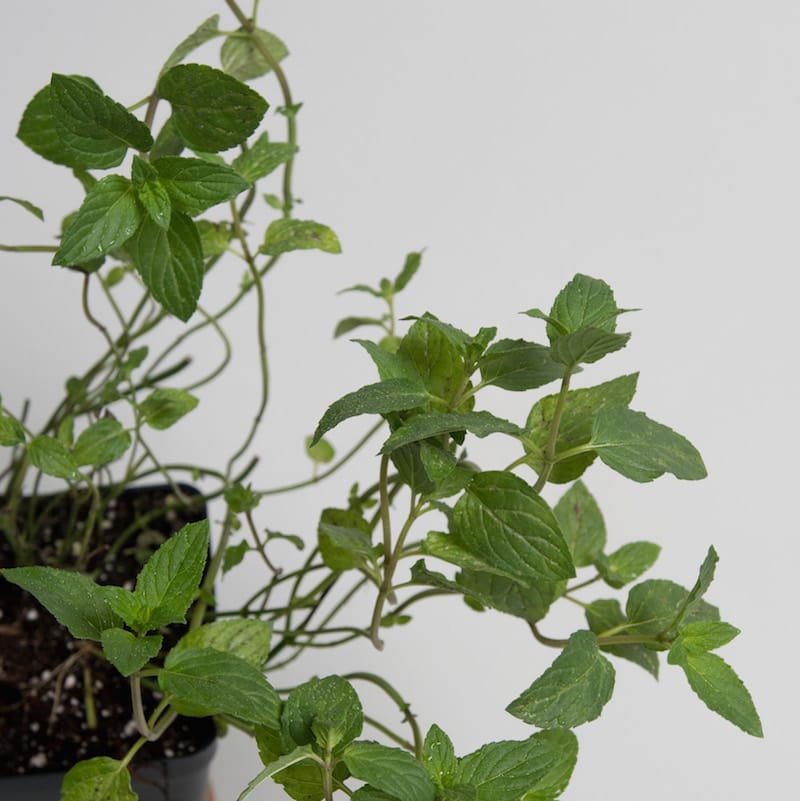
Mint 'Peppermint'
Mint 'Peppermint'
Quick Growing Facts
- Culinary
- Medicinal
- Deer Resistant
- Aroma
- Container
- Pollinator
- Indoor
- Drought
Couldn't load pickup availability
Peppermint Plants
Mentha × piperita
Bring the familiar fragrance of fresh peppermint to your herb garden. Its aromatic leaves deliver a bold, cooling mint flavor that pairs beautifully with chocolate, fruit, and refreshing drinks.
A hybrid of watermint and spearmint, Peppermint is a vigorous perennial best given a space of its own. A container near the kitchen or patio keeps fresh sprigs within easy reach and helps manage its spreading growth.
Fresh Flavor for Your Kitchen
Steep freshly picked leaves for a fragrant herbal tea, stir chopped leaves into fruit salads, or use a sprig to finish lemonade and desserts. Peppermint’s pronounced flavor can go a long way, so start with a small amount and adjust to taste.
For a different mint flavor in your cooking and drinks, explore our mint plant collection.
Growing Peppermint
- Light: Full sun to partial shade. Afternoon shade can help plants during hot weather.
- Soil: Choose fertile, well-drained soil that retains some moisture.
- Water: Keep the soil evenly moist without leaving the roots waterlogged. Check containers regularly and water according to soil moisture rather than a fixed schedule.
- Containers: Use a pot with drainage holes. Keep it separate from other herbs to help control its vigorous spread.
- Feeding: Avoid excessive fertilizer. If growth indicates a need for feeding, follow the fertilizer label’s directions for edible herbs.
- Seasonal growth: Peppermint may die back during cold weather and return from its roots in spring where winter conditions are suitable.
Harvest for Fresh, Leafy Growth
Once your plant is established, snip tender stem tips regularly to encourage branching. Leave plenty of healthy foliage after each harvest so the plant can continue growing.
Use the leaves fresh, or dry small harvests for later use in teas and cooking. Store fully dried leaves in an airtight container away from heat and direct light.
New plants just arrived? Follow our arrival and planting guide before moving them into their permanent home. For additional help, visit our Help Center.