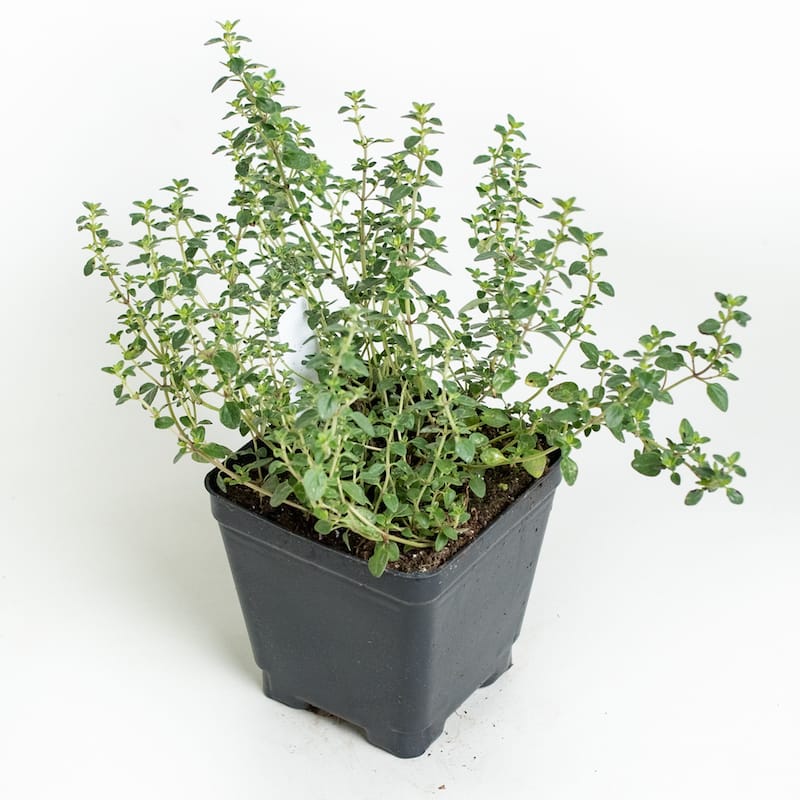
Thyme 'English'
Thyme 'English'
Quick Growing Facts
- Culinary
- Medicinal
- Deer Resistant
- Aroma
- Container
- Pollinator
- Indoor
- Cut
- Butterfly
- Drought
Couldn't load pickup availability
English Thyme Plants
Thymus vulgaris
A kitchen classic with lasting garden appeal, English Thyme brings a savory, earthy fragrance to sunny beds and containers. Its small, aromatic leaves grow along slender, woody stems, forming a compact plant that fits neatly into an herb garden or along a border.
A Dependable Herb for Everyday Cooking
Use fresh or dried English Thyme to season roasted vegetables, chicken, fish, soups, and stews. Add whole sprigs to dishes that simmer, then remove the woody stems before serving. Strip the small leaves from tender stems when you want to sprinkle them directly into a recipe.
Thyme pairs beautifully with rosemary and oregano and is a traditional ingredient in bouquet garni. Explore our thyme plant collection for more flavors and growing habits.
Small Leaves, Plenty of Garden Character
English Thyme’s compact growth makes it useful near sunny paths, in rock gardens, and in containers with other herbs that prefer good drainage. Small flowers add seasonal interest and attract visiting pollinators. Foliage may remain evergreen in mild climates, while its winter appearance varies with local conditions.
Growing English Thyme
- Light: Choose full sun, ideally with at least six hours of direct sunlight daily. Indoors, provide a very bright location and supplement with a grow light if needed.
- Soil: Plant in well-drained soil. Avoid low spots that stay wet after rain. For containers, use a well-draining potting mix and a pot with drainage holes.
- Water: Water regularly while the plant establishes. Once established, allow the soil to dry somewhat between waterings. Check containers more often during hot weather.
- Feeding: Avoid excessive fertilizer. Thyme generally needs little supplemental feeding in suitable garden soil.
- Pruning: Trim lightly to encourage branching and maintain a compact shape. Leave healthy leafy growth rather than cutting deeply into bare, woody stems.
Harvest Fresh Sprigs as Needed
Begin harvesting once your plant is established and growing well. Snip tender stem tips, taking small amounts and leaving plenty of foliage for continued growth. Use the leaves fresh or dry small harvests for later cooking.
New plants just arrived? Follow our arrival and planting guide before moving them into their permanent garden bed or container.