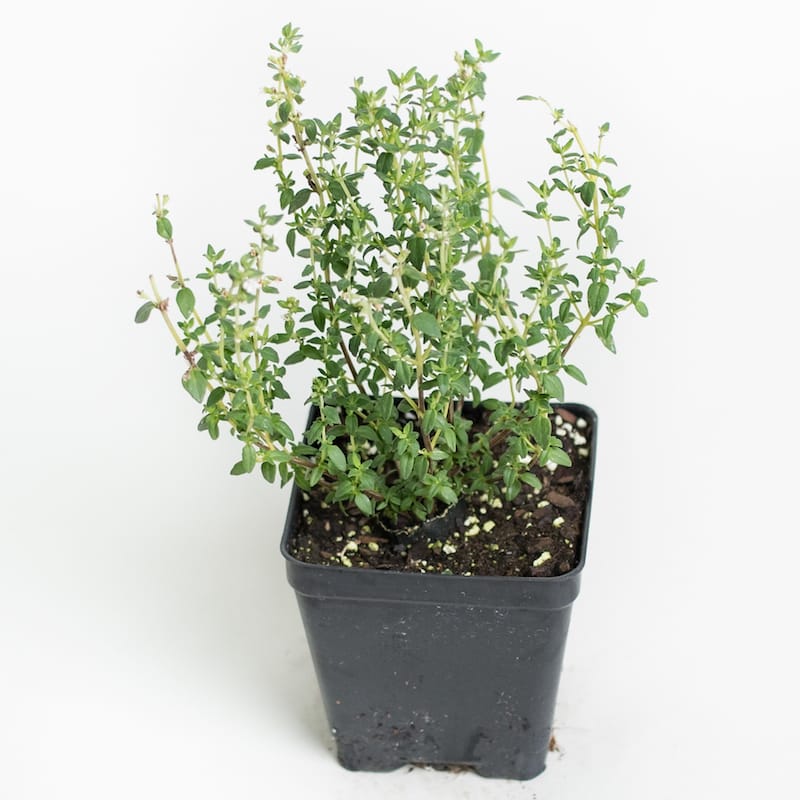
Thyme 'French'
Thyme 'French'
Quick Growing Facts
- Culinary
- Medicinal
- Deer Resistant
- Aroma
- Container
- Pollinator
- Indoor
- Cut
- Butterfly
- Drought
Couldn't load pickup availability
French Thyme Plants
Thymus vulgaris ‘French’
Bring a French kitchen staple to your herb garden. French Thyme’s small, narrow leaves offer a warm, savory fragrance that complements roasted vegetables, meats, soups, and sauces.
Its compact, woody growth makes it an attractive choice for sunny herb beds and containers. Small flowers add seasonal interest and welcome visiting pollinators.
Classic Flavor for Everyday Cooking
Add whole sprigs to stocks, stews, and braised dishes, then remove the woody stems before serving. Strip the leaves from tender stems for marinades, herb butter, roasted potatoes, and homemade bread.
Use French Thyme fresh or dried, adjusting the amount to taste. It pairs well with rosemary and oregano and is a traditional ingredient in bouquet garni.
Growing French Thyme
- Light: Choose full sun, ideally with at least six hours of direct sunlight daily.
- Soil: Plant in well-drained soil. Avoid low spots where water collects after rain.
- Water: Water regularly while the plant establishes. Once established, allow the soil to dry somewhat between waterings rather than keeping it constantly moist.
- Containers: Use a pot with drainage holes and a well-draining potting mix. Check container moisture more often during hot weather.
- Feeding: Avoid excessive fertilizer. Thyme generally needs little supplemental feeding in suitable garden soil.
- Pruning: Trim lightly to encourage branching and maintain its shape. Leave healthy leafy growth rather than cutting deeply into bare, woody stems.
Harvest Fresh Sprigs as Needed
Begin harvesting once your plant is established and growing well. Snip tender stem tips, leaving plenty of foliage for continued growth. Dry small harvests for later use and store fully dried leaves in an airtight container away from heat and light.
Explore our thyme plant collection for more kitchen and garden favorites. New plants just arrived? Follow our arrival and planting guide before planting.