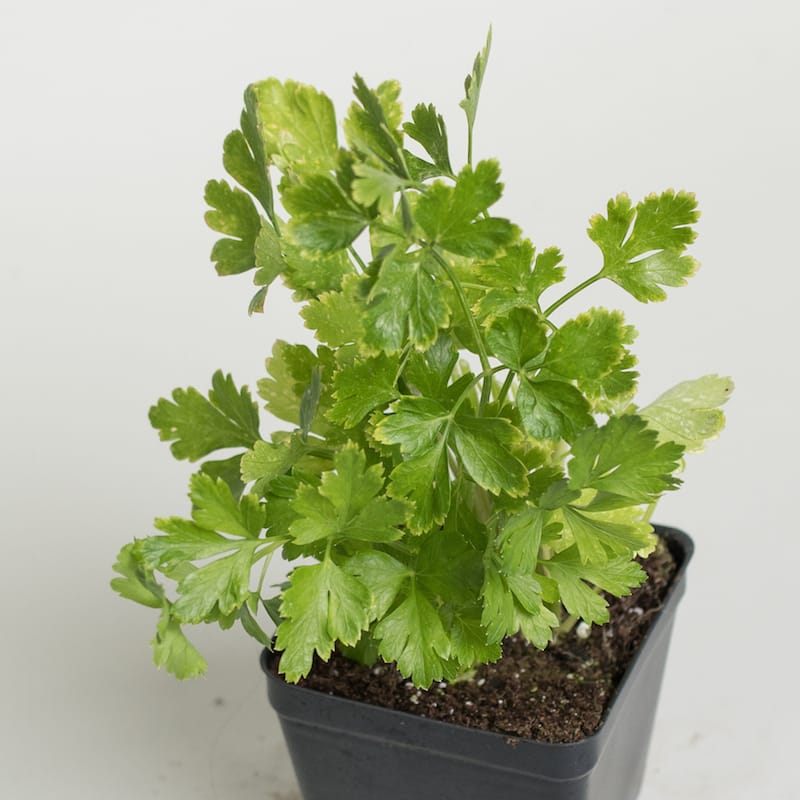
Cutting Celery
Cutting Celery
Quick Growing Facts
- Culinary
- Aroma
- Container
- Indoor
Couldn't load pickup availability
Cutting Celery Plants
Apium graveolens
Enjoy fresh celery flavor without growing a full-sized bunch of stalk celery. Also known as leaf celery or soup celery, Cutting Celery produces aromatic green leaves and slender stems that are easy to snip for everyday cooking.
Big Flavor from a Small Harvest
Add chopped leaves and tender stems to soups, stews, stocks, sauces, and salads. Its concentrated celery flavor makes a little go a long way—start with a small amount and adjust to taste.
Although its leafy appearance may resemble parsley, Cutting Celery brings its own distinctly savory celery flavor to the kitchen. Grow it near your cooking herbs for a convenient supply of fresh seasoning.
Growing Cutting Celery
- Light: Full sun to partial shade. Afternoon shade can be helpful during hot weather.
- Soil: Choose fertile, well-drained soil enriched with compost.
- Water: Keep the soil consistently moist without leaving it waterlogged. Avoid allowing the root ball to dry out completely.
- Growth cycle: A biennial generally grown as an annual for its leaves and tender stems.
- Containers: Use a pot with drainage holes and check moisture regularly, especially in warm weather.
Harvest a Little at a Time
Begin harvesting once your plant is established and growing well. Snip leaves and tender stems as needed, leaving healthy growth to support the next harvest. Harvest before flowering for the best leafy crop.
For help settling in your new plants, follow our arrival and planting guide.