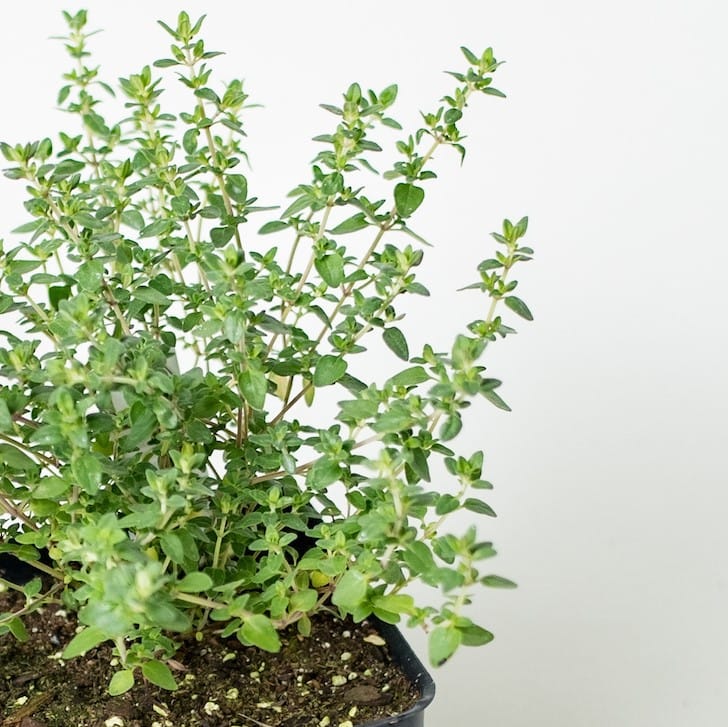
Thyme 'Lemon'
Thyme 'Lemon'
Quick Growing Facts
- Culinary
- Medicinal
- Deer Resistant
- Aroma
- Container
- Pollinator
- Indoor
- Cut
- Butterfly
- Drought
Couldn't load pickup availability
Lemon Thyme Plants
Thymus citriodorus
Enjoy the familiar savory flavor of thyme with a bright lemon fragrance. Lemon Thyme’s small, aromatic leaves bring a fresh citrus note to everyday cooking, while its compact, spreading growth makes it an attractive addition to herb gardens, sunny borders, and containers.
Fresh Lemon Flavor for Your Kitchen
Use Lemon Thyme to season roasted vegetables, chicken, fish, soups, and marinades. Its leaves add lemon aroma without the acidity of lemon juice, making it a useful complement to citrus ingredients.
Add whole sprigs to dishes that simmer, then remove the woody stems before serving. For a fresher finishing flavor, sprinkle chopped leaves over food near the end of cooking. Start with a small amount and adjust to taste.
Fragrance and Flowers for the Garden
This low-growing herb forms a spreading mound of small green leaves. Clusters of delicate flowers add seasonal interest and attract visiting pollinators. Plant it near a sunny path or patio where you can enjoy its fragrance when the foliage is brushed.
Growing Lemon Thyme
- Light: Choose a location with full sun.
- Soil: Plant in well-drained soil. Avoid areas that remain wet after rain.
- Water: Water regularly while the plant establishes. Once established, allow the soil to dry somewhat between waterings rather than keeping it constantly moist.
- Containers: Use a pot with drainage holes and a well-draining potting mix.
- Harvest: Snip tender stem tips as needed once the plant is growing well. Trim lightly to encourage branching, leaving healthy foliage on the plant.
Explore our thyme plants for more flavors and garden favorites. For help settling in a new arrival, follow our arrival and planting guide.